
Net Radiation Meter | What is it and how do you use it?
A net radiation meter is an advanced sensor that measures both incoming and outgoing radiation in the range from UV to far-infrared. A simple net radiation meter, like the one in Image 1, displays only one output (the net radiation). This simple meter uses a thermopile sensor on both the top and bottom, with a range from 200 to 100,000 nm.
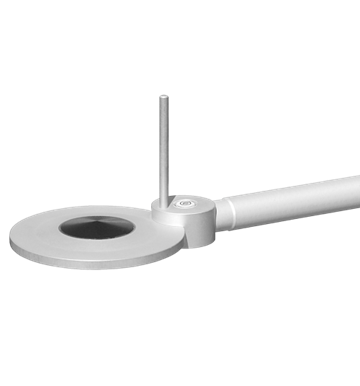
Image 1: Simple Net Radiation Meter
An advanced net radiation meter, like the one in Image 2, uses as many as four separate sensors:
-
- A pyranometer on the top and bottom for visible light.
-
- A pyrgeometer on the top and bottom for far-infrared light.

Installation of net radiation meter
Install the net radiation meter above the canopy and ensure that the meter is level in order to obtain valid measurements. Often, a spirit level is integrated into the net radiation meter to make this easier.
Do’s and Don’ts when installing a net radiation meter
-
- Make sure the radiation meter remains clean and free from water. While the meter is naturally coated to be resistant to these elements, regular cleaning ensures a longer lifespan and more reliable data.
-
- Do not place the sensor close to obstructions, as this can obstruct the sensor’s view and make the measurement unreliable.
Analyzing data from the net radiation meter
With the net radiation meter, you can see at any given moment whether net radiation is moving towards or away from the crop. Based on this data, you can decide whether to shade more or less. It’s important to minimize the radiation emitted from the crop to the outside, in order to cultivate energy-efficiently. This is especially crucial in the winter.
In Het Nieuwe Telen (The New Cultivation), the greenhouse is considered an energy source, and sustainable farming is key. The net radiation meter is widely used to efficiently shade and ventilate based on the measured radiation inside the greenhouse.
Advice from Ledgnd
By measuring the incoming and outgoing radiation, it’s possible to take actions such as adjusting the shading based on the energy balance within the greenhouse. This allows for more sustainable cultivation by saving a significant amount of energy. The Ledgnd team continuously learns about the new way of growing because they see this cultivation method as the future!
New articles
Ledgnd x HortiSoccer World Cup Pool 2026 brings the horticultural industry together
With the launch of the renewed Ledgnd x HortiSoccer World Cup Pool 2026, people working across the horticultural industry once again get the chance to compete against each other during the FIFA World…
GreenTech Amsterdam 2026
From 9 to 11 June 2026, RAI Amsterdam will be all about GreenTech, the international trade fair for the horticulture sector. Professionals from around the world will come together to share knowledge a…
HortiContact 2026 Recap
Ledgnd Reflects on a Successful Edition of HortiContact 2026 HortiContact 2026 at Evenementenhal Gorinchem once again served as a meeting place for the Dutch greenhouse horticulture sector. Ledgnd loo…
Read more
Ledgnd x HortiSoccer World Cup Pool 2026 brings the horticultural industry together
With the launch of the renewed Ledgnd x HortiSoccer World Cup Pool 2026, people working across the horticultural industry once again get the chance to compete against each other during the FIFA World…
GreenTech Amsterdam 2026
From 9 to 11 June 2026, RAI Amsterdam will be all about GreenTech, the international trade fair for the horticulture sector. Professionals from around the world will come together to share knowledge a…
HortiContact 2026 Recap
Ledgnd Reflects on a Successful Edition of HortiContact 2026 HortiContact 2026 at Evenementenhal Gorinchem once again served as a meeting place for the Dutch greenhouse horticulture sector. Ledgnd loo…
Do you want to know more?
Interested in what Ledgnd can do for you? Leave your phone number, and we will contact you as soon as possible for a non-binding informational conversation