
From Climate Control to Plant Control: The “Google Translate” of the Plant
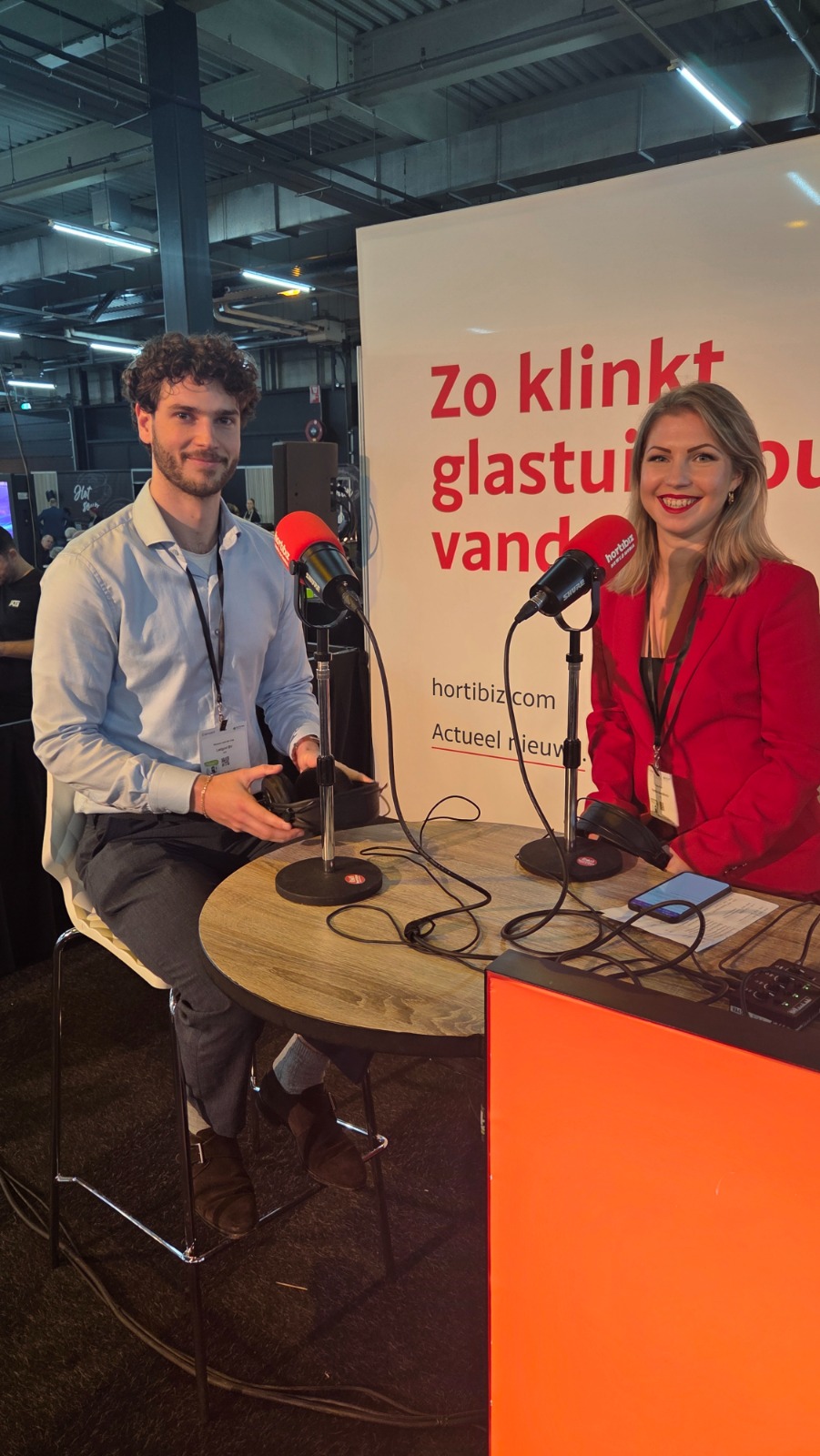
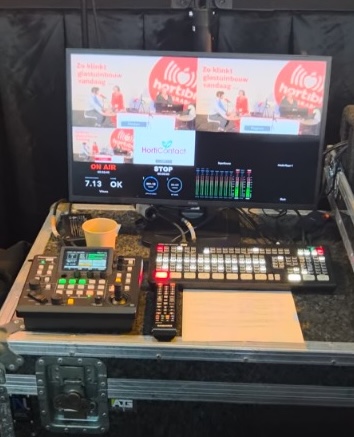
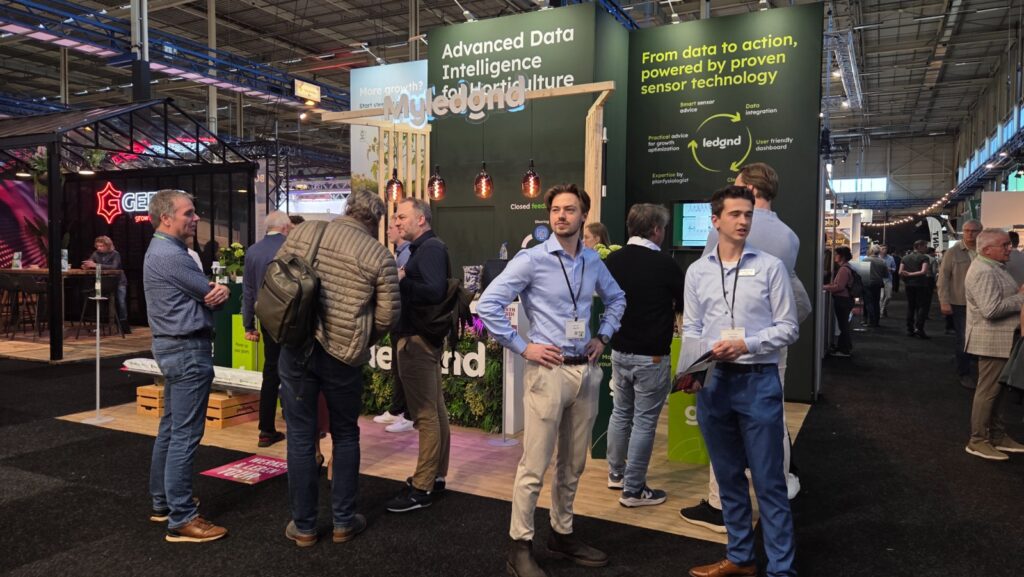
During HortiContact in Gorinchem, Ramon van de Vrie spoke on the HortiBiz NewsRadio stage about a development that is becoming increasingly visible in greenhouse horticulture: the shift from climate-based control toward steering cultivation based on plant feedback.
Where growers traditionally manage their greenhouses primarily through temperature, humidity and CO₂ levels, the crop itself is increasingly becoming the primary source of information. According to Van de Vrie, this represents the logical next step in the digitalization of the sector. “We still use a lot of climate data, but now we connect it with plant data. You could say we act as a kind of Google Translate for the plant,” he explains
From LED advisory to data platform
Ledgnd was founded around seven years ago from a very different starting point. At the time, Van de Vrie spent a year in Hong Kong conducting research into the application of LED lighting in horticulture.
“Growers needed knowledge to support their transition to LED lighting. We started by analyzing data related to light and cultivation strategies. From there, the concept gradually evolved.” Over the years, this initial advisory work developed into a fully fledged data platform: MyLedgnd. The platform integrates data from multiple sources in the greenhouse and translates it into actionable insights for growers.
The plant as the primary source of information
One of the key differences compared with earlier generations of cultivation software is the shift in focus from climate parameters to the actual response of the plant. “In the greenhouse, decisions were often based on experience or intuition. Now we can see exactly how the plant feels, because it communicates this through sensors.” Various forms of plant feedback are measured to achieve this. One example is leaf temperature. When a plant experiences stress and closes its stomata, leaf temperature may rise relative to the surrounding air.
“When the leaf temperature exceeds the ambient temperature, the plant is essentially telling you: something is not right.” Fluorescence measurements also play an important role. These measurements capture infrared light emitted by plants during photosynthesis, providing insight into the efficiency of the photosynthetic process. “When plants emit more infrared light, it can indicate that photosynthesis is less efficient. At that point we ask: do they need more CO₂, more light, or perhaps less?”
Turning data into action
In modern greenhouses, sensors can generate new data points every few minutes. According to Van de Vrie, the real challenge lies not in collecting data, but in translating it into practical steering decisions. “Every five minutes a new data point comes in. That quickly becomes a massive volume of data. The real challenge is translating that data into concrete actions for the grower.” Algorithms are used to recognize patterns and analyze relationships between different parameters. Ultimately, these insights can even be linked directly to the greenhouse climate computer.
First steps toward the autonomous greenhouse
In some situations, this integration is already fully implemented. According to Van de Vrie, there are now greenhouses where the climate strategy is adjusted directly based on plant feedback. “We’ve reached the point where we can steer a greenhouse based on plant control. The step from climate control to plant control has effectively been made.”
The first results are promising. By steering more precisely based on the crop’s needs, energy use and other inputs can be optimized. “We are seeing energy savings, higher production levels and improved product quality. Because we understand how the plant feels, we can steer much more accurately.”
A low-threshold starting point
However, this development does not mean that growers must immediately automate their entire greenhouse. In many cases, implementation begins with only a limited number of sensors. “We usually start very pragmatically. We add a few plant-feedback sensors to the existing system and observe how the plant responds to the current strategy. From there, we can test improvements together.”
Measurements of transpiration and leaf temperature alone can already provide valuable insights. Which sensors are ultimately deployed depends strongly on the crop, the grower’s objectives and the specific greenhouse conditions.
Collaboration with sensor technology partners
Ledgnd itself does not develop sensors but collaborates with a range of technology partners. New sensors are thoroughly tested before they are implemented in commercial greenhouses. “We only introduce products to growers when we are confident they truly deliver value. Validity is extremely important to us.” To ensure this, the company operates its own R&D process in which sensor technologies are validated.
The next step: AI and predictive models
Looking ahead, Van de Vrie expects artificial intelligence and image analysis to become increasingly integrated into greenhouse operations. “We will work much more with AI, camera images and predictive models. We are developing models that allow us to forecast whether a new strategy will ultimately lead to higher yields.” By linking plant models with real-time greenhouse data, growers will be able to intervene earlier and further optimize crop performance.
Applications across multiple crops
Currently, Ledgnd sees strong adoption particularly in cut flowers, potted plants and high-wire crops. Research is also underway in strawberry cultivation, especially with everbearing varieties that are increasingly grown during winter cycles. Despite the technological advances, the core principle remains simple. “The plant itself is becoming the starting point for cultivation decisions. If you understand how the plant feels, you can steer much more accurately. That is ultimately the next step in data-driven cultivation.”
New articles
Ledgnd x HortiSoccer World Cup Pool 2026 brings the horticultural industry together
With the launch of the renewed Ledgnd x HortiSoccer World Cup Pool 2026, people working across the horticultural industry once again get the chance to compete against each other during the FIFA World…
GreenTech Amsterdam 2026
From 9 to 11 June 2026, RAI Amsterdam will be all about GreenTech, the international trade fair for the horticulture sector. Professionals from around the world will come together to share knowledge a…
HortiContact 2026 Recap
Ledgnd Reflects on a Successful Edition of HortiContact 2026 HortiContact 2026 at Evenementenhal Gorinchem once again served as a meeting place for the Dutch greenhouse horticulture sector. Ledgnd loo…
Read more
Ledgnd x HortiSoccer World Cup Pool 2026 brings the horticultural industry together
With the launch of the renewed Ledgnd x HortiSoccer World Cup Pool 2026, people working across the horticultural industry once again get the chance to compete against each other during the FIFA World…
GreenTech Amsterdam 2026
From 9 to 11 June 2026, RAI Amsterdam will be all about GreenTech, the international trade fair for the horticulture sector. Professionals from around the world will come together to share knowledge a…
HortiContact 2026 Recap
Ledgnd Reflects on a Successful Edition of HortiContact 2026 HortiContact 2026 at Evenementenhal Gorinchem once again served as a meeting place for the Dutch greenhouse horticulture sector. Ledgnd loo…
Do you want to know more?
Interested in what Ledgnd can do for you? Leave your phone number, and we will contact you as soon as possible for a non-binding informational conversation